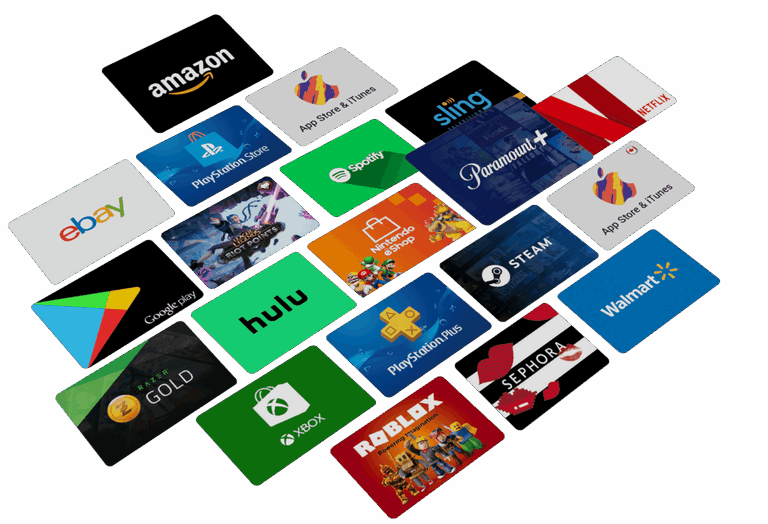
Let’s be honest: how many gift cards are collecting digital dust in your email right now?
Maybe it’s a $25 Steam code from a game giveaway you forgot about. Or a $50 Amazon card from a survey you took “just in case.” Maybe your company gave you a Google Play bonus, but you use an iPhone. Or you got a PlayStation gift card as a holiday present—and you’re a PC-only gamer.
You’re not alone. Billions of dollars in unused gift cards vanish every year—not because they’re lost or stolen, but because they’re stuck in places we don’t need them.
And for a long time, the only ways to “unlock” that value were messy, risky, or just too much work: haggling on Telegram, trusting strangers on Discord, or hoping a friend might want your unused Xbox credit.
But lately, something’s changed. Not with flashy ads or viral campaigns—but quietly, under the hood. Automation is turning locked digital value into real, spendable cash—and it’s working.
The Real Problem Isn’t Waste—It’s Mismatch
Gift cards weren’t designed to be flexible. They were designed to keep you inside one store, one app, one ecosystem.
That’s great for companies. They know you’ll likely spend more than the card’s value—or that you’ll forget about it entirely. (Studies show up to 30% of gift card balances are never redeemed.)
But for users? It’s frustrating. You’ve been “paid” or “gifted” real value—but only if you play by someone else’s rules.
It’s like being handed a coupon for a restaurant you’d never eat at, in a city you’ve never visited. The value exists, but it’s useless to you.
This isn’t just about money. It’s about agency. And for years, we had very little of it.
Why “Just Resell It” Never Really Worked
Before reliable platforms existed, the resale world was a Wild West:
- You’d post your card code in a Telegram group.
- Ten people would reply: “Send balance screenshot.”
- You’d send it. They’d disappear.
- Or worse: they’d send a fake PayPal confirmation, you’d send the code—and never see a cent.
Even when deals worked, they were slow, stressful, and full of guesswork. How do you prove a $30 card still has $30? You can’t—not without letting someone into your account (which you shouldn’t do).
The core issue? Humans aren’t built to instantly verify digital balances. We rely on trust, screenshots, and hope. And in the digital world, that’s a recipe for loss.
Enter Automation: The Quiet Game-Changer
The real innovation isn’t in marketing—it’s in how modern platforms verify value instantly, without you lifting a finger.
Take gift2money.com, for example. You enter a gift card code. Within seconds, the system checks the balance directly against the issuer’s system (or a secure validation layer). No screenshots. No “I swear it’s real.” No waiting.
If the balance is valid, you get a clear offer: “We’ll pay $26.50 for your $30 Steam card.”
You accept—or walk away.
If you accept, money lands in your PayPal, bank, or crypto wallet—often in minutes.
This isn’t AI “magic.” It’s smart automation solving a real human problem: “How do I turn this useless digital token into something I actually control?”
And it works because it removes the guesswork—not by promising more money, but by offering certainty.
Liquidity Isn’t Just Finance Jargon—It’s Peace of Mind
In fintech circles, people talk about “liquidity” like it’s abstract. But for regular users, it’s deeply practical.
When your gift card is liquid, you:
- Stop thinking about it.
- Stop feeling guilty for “wasting” it.
- Stop hoarding digital clutter “just in case.”
One game tester I know used to save every platform credit he earned—Steam, Epic, Xbox—“for a rainy day.” But he only played on PC via third-party stores. The cards sat unused for months. Now? He sells them the same day he gets them through gift2money.com and puts the cash toward his home office setup.
It’s not about getting rich. It’s about closing the loop—so your digital life doesn’t leave loose ends.
Who’s Using This—And Why It Matters
It’s not just casual users. The real power users are:
- Freelancers paid in Amazon or Google credits they can’t use for business expenses.
- Content creators who get promo codes as partnership perks—but need cash for editing software or stock assets.
- Remote workers in emerging markets who receive U.S.-only gift cards with no local utility.
For them, automated resale isn’t a side hustle—it’s financial plumbing. It turns restricted rewards into flexible resources.
Platforms like gift2money.com don’t position themselves as “marketplaces.” They act more like digital exchange infrastructure—quiet, reliable, and focused on one job: verification + payout.
The Bigger Picture: Digital Value Should Be Modular
Gift cards are just the beginning. We’re moving toward a world where all digital value should be transferable, not trapped.
Think about it:
- Why should a refund take 10 business days when systems can auto-process it?
- Why should loyalty points expire if they could convert to cash or credits elsewhere?
- Why should platform credits vanish when your needs change?
Automation makes modular value possible—not by inventing new money, but by unlocking what’s already there.
And the winners won’t be the flashiest apps, but the ones that just work, every time.
Final Thought
The future of digital rewards isn’t more gift cards.
It’s fewer barriers.
You shouldn’t have to contort your habits to fit a $25 Amazon credit.
You should be able to turn it into $22 of real choice—quickly, safely, and without drama.
That’s not a luxury. It’s basic digital fairness.
And thanks to quiet, well-built automation—it’s already here.