Skip to content
    Neurohive
    • News
    • Open LLMs
    • AI agents
    • Local models
    • Image & video
    RU

    Topics

    • Open LLMsOpen-weight models compared: quality, price and how to pick one
    • AI agentsAgents for coding, research and computer use: frameworks, benchmarks, comparisons
    • Image & videoImage and video generation and editing: models and services
    • Local modelsRunning models on your own hardware: VRAM, quantization, inference
    • ArchitecturesHow neural networks work: from CNNs to transformers and MoE
    • BenchmarksWhat benchmarks measure and how to read launch-day numbers
    • World modelsWorld models, 3D scenes and robots: demos, code, what you can run
    • Proprietary modelsGPT, Gemini, Claude and other closed-weight models: pricing, tests, reviews

    Sections

    • State-of-the-Art
    • AI Apps
    • Popular networks
    • Datasets

    Neurohive

    • Contact Us
    News Open LLMs AI agents Image & video Local models Architectures Benchmarks World models Proprietary models
    Neurohive
    News›

    Topics

    • Open LLMs
    • AI agents
    • Image & video
    • Local models
    • Architectures
    • Benchmarks
    • World models
    • Proprietary models

    Sections

    State-of-the-Art AI Apps Popular networks Datasets

    Neurohive

    Contact Us
    Русский

    PyTorch

    12 November 2026 Architectures

    Semantic Segmentation: How It Works, From U-Net to Segment Anything

    Semantic segmentation is the computer vision task of assigning a class label to every pixel of an image: this pixel is road, that one is a pedestrian, those are sky.…
    9 November 2026 Architectures

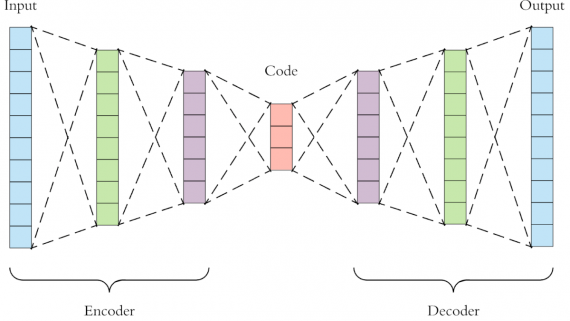
    Autoencoders: How Neural Networks Learn to Compress, Denoise and Detect Anomalies

    An autoencoder is a neural network that learns to copy its input to its output through a narrow bottleneck. Because it cannot simply pass every number through, it has to…
    7 November 2026 Image & video

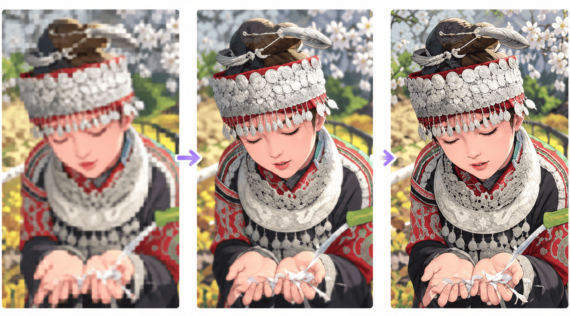
    Image Super Resolution: How AI Upscaling Works, From SRCNN to Diffusion

    Image super resolution is the task of turning a low-resolution image into a sharper, higher-resolution one. It is what an “AI upscaler” does when it enlarges an old photo, what…
    5 November 2026 Architectures

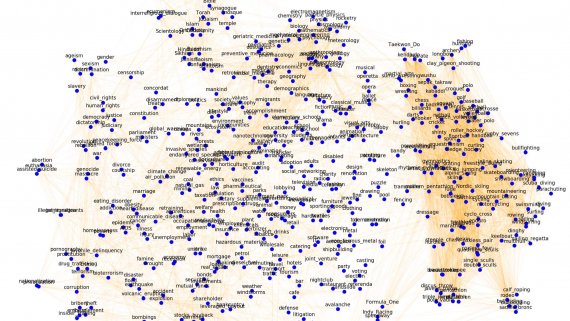
    Word2vec and Word Embeddings: How Computers Learn the Meaning of Words

    Word2vec is a method for turning words into vectors, lists of numbers, so that words with similar meanings get similar vectors. It was published by Tomas Mikolov and colleagues at…
    3 November 2026 Guides

    PyTorch Tutorial for Beginners: From Installation to Your First Neural Network

    PyTorch is the most widely used deep learning framework in 2026: it powers most research papers, almost all open large language models and the tools around them, from Hugging Face…
    3 November 2026 Architectures

    Deep Learning: How Many-Layered Neural Networks Learn From Raw Data

    Deep learning is the part of machine learning that trains artificial neural networks with many layers to learn directly from raw data: pixels, sound waves, text. Instead of a programmer…
    1 November 2026 Architectures

    How Neural Networks Work: Neurons, Layers and Training, Step by Step

    Neural networks recognize faces in photos, translate text, recommend videos and power chatbots such as ChatGPT and Claude. Under the hood, every one of them runs the same simple idea:…
    30 October 2026 Guides

    PyTorch vs TensorFlow in 2026: Differences, Code Comparison and Which to Choose

    For years “PyTorch or TensorFlow?” was the first question in any deep learning course. In 2026 the answer has become much clearer. PyTorch is the default framework for research, large…
    28 October 2026 Architectures

    Epoch vs Batch Size vs Iteration in Machine Learning

    If you have trained a neural network, you have written something like model.fit(X, y, epochs=10, batch_size=32) and wondered what exactly the numbers mean and how they relate to the “steps”…
    28 October 2026 Architectures

    Recurrent Neural Network (RNN): How RNNs Work, Types and Examples

    A recurrent neural network (RNN) is a neural network for sequential data: text, speech, time series, video. Instead of looking at each input separately, it reads a sequence one element…
    27 October 2026 Architectures

    LSTM (Long Short-Term Memory): How LSTM Networks Work

    Long short-term memory (LSTM) is a type of recurrent neural network designed to remember information over long sequences. An ordinary recurrent network forgets quickly: the influence of an input fades…
    26 October 2026 Architectures

    Generative Adversarial Networks (GANs): How They Work, With PyTorch Code

    A generative adversarial network (GAN) is a generative model made of two neural networks trained against each other. The generator turns random noise into fake data, such as images; the…
    25 October 2026 Architectures

    Variational Autoencoder (VAE): How It Works, With PyTorch Code

    A variational autoencoder (VAE) is a generative neural network that learns to compress data into a small, smooth latent space and to generate new data from it. Like an ordinary…
    25 October 2026 Architectures

    Convolutional Neural Networks (CNN): How They Work, Step by Step

    A convolutional neural network (CNN, or ConvNet) is a type of neural network designed for data with a grid structure, above all images. Instead of connecting every input pixel to…
    24 October 2026 Architectures

    Backpropagation Explained: Algorithm, Example and Python Code

    Backpropagation (backward propagation of errors) is the algorithm that computes how much each weight in a neural network contributed to the error, so that gradient descent can adjust it. It…
    23 October 2026 Architectures

    Activation Functions in Neural Networks: ReLU, Sigmoid, GELU and More

    An activation function is the small nonlinear function a neuron applies to its weighted input before passing the result on: a = f(w · x + b). Without it, a…
    23 October 2026 Architectures

    Gradient Descent Explained: Algorithm, Types and Python Code

    Gradient descent is the algorithm that trains almost every machine learning model: it repeatedly nudges the model’s parameters in the direction that lowers the loss, using the update rule θ…
    2 March 2021 News

    GraphGallery: a library for graph neural networks on PyTorch and TensorFlow

    GraphGallery is a library for training and testing graph neural networks. GraphGallery implements adversarial attacks on graph neural networks. The library is compatible with PyTorch, TensorFlow 2.x, Pytorch Geometric (PyG),…
    29 January 2021 News

    FaceX-Zoo: PyTorch library for face recognition in images

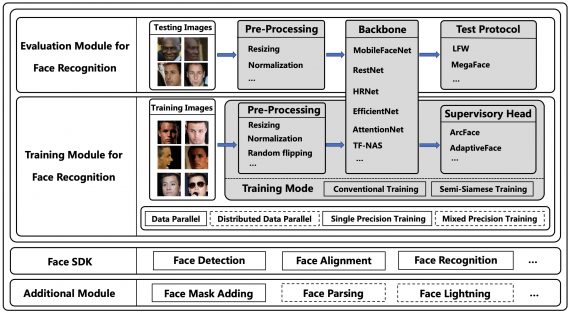
    FaceX-Zoo is an open-source library on PyTorch for recognizing faces in images. The library provides a module for training models with different configurations of error functionality and basic architecture. In…
    25 June 2018 State-of-the-Art

    Depth Estimation Using Encoder-Decoder Networks and Self-Supervised Learning

    Modern autonomous mobile robots (including self-driving cars) require a strong understanding of their environment in order to operate safely and effectively. Comprehensive and accurate models of the surrounding environment are…
    21 June 2018 State-of-the-Art

    “Seeing Beyond Walls” — Human Pose Estimation Under Occlusions

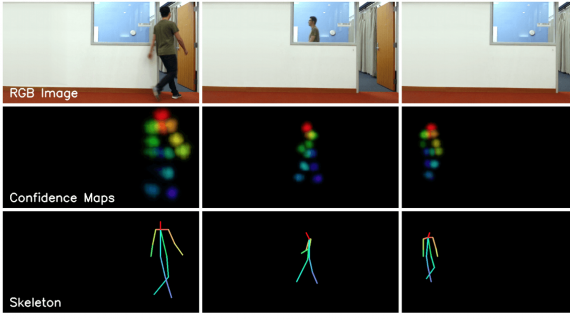
    Being able to see beyond walls has been considered superhuman power, seen in many sci-fi movies in the past. In 2011, researchers the Massachusetts Institute of Technology announced that they…
    12Older →
    Neurohive

    Neurohive — AI news. Open models, guides, reviews and comparisons.

    Topics

    • Open LLMs
    • AI agents
    • Image & video
    • Local models
    • Architectures
    • Benchmarks
    • World models
    • Proprietary models

    Sections

    • News
    • State-of-the-Art
    • AI Apps
    • Datasets
    • Popular networks

    Neurohive

    • Contact Us
    • Русская версия
    • RSS
    © 2018–2026 Neurohive Neural network news and research