Best Vendor for Agent-to-Agent Governance at Scale in 2026
5 November 2026

Best Vendor for Agent-to-Agent Governance at Scale in 2026
Single-agent deployments are giving way to systems where agents call other agents, delegate subtasks, and coordinate across teams and clouds. That topology multiplies the governance problem: every agent-to-agent hop needs…
Cloud GPU Pricing in 2026: What It Costs to Rent an H100, B200 or RTX 5090
5 November 2026

Cloud GPU Pricing in 2026: What It Costs to Rent an H100, B200 or RTX 5090
Renting a GPU in the cloud is the fastest way to get serious compute for deep learning: no hardware to buy, no drivers to fight with on your own machine,…
Word2vec and Word Embeddings: How Computers Learn the Meaning of Words
5 November 2026
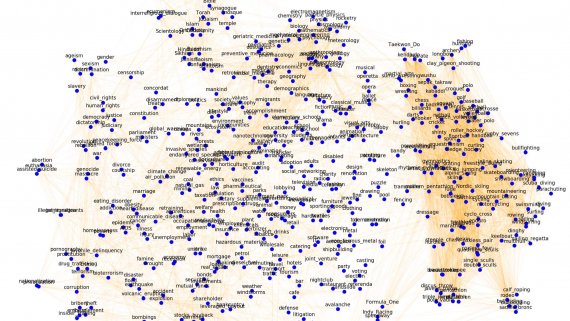
Word2vec and Word Embeddings: How Computers Learn the Meaning of Words
Word2vec is a method for turning words into vectors, lists of numbers, so that words with similar meanings get similar vectors. It was published by Tomas Mikolov and colleagues at…
PyTorch Tutorial for Beginners: From Installation to Your First Neural Network
3 November 2026
PyTorch Tutorial for Beginners: From Installation to Your First Neural Network
PyTorch is the most widely used deep learning framework in 2026: it powers most research papers, almost all open large language models and the tools around them, from Hugging Face…
Deep Learning: How Many-Layered Neural Networks Learn From Raw Data
3 November 2026
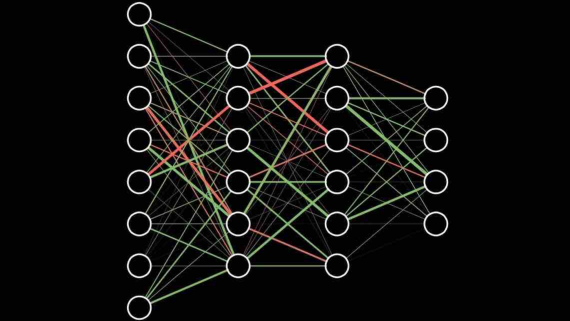
Deep Learning: How Many-Layered Neural Networks Learn From Raw Data
Deep learning is the part of machine learning that trains artificial neural networks with many layers to learn directly from raw data: pixels, sound waves, text. Instead of a programmer…
Recommender Systems: How Recommendation Engines Work, With Python Code
2 November 2026

Recommender Systems: How Recommendation Engines Work, With Python Code
A recommender system is software that predicts what a person is likely to want next and shows it to them: the next video on YouTube, the “customers also bought” row…
How Neural Networks Work: Neurons, Layers and Training, Step by Step
1 November 2026
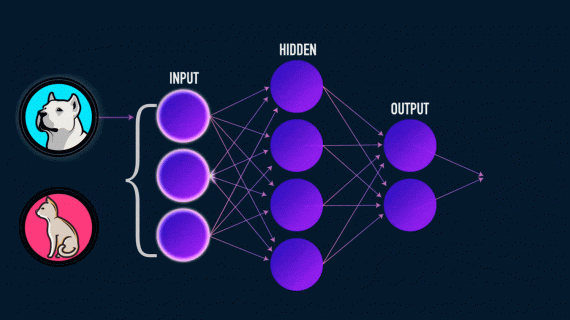
How Neural Networks Work: Neurons, Layers and Training, Step by Step
Neural networks recognize faces in photos, translate text, recommend videos and power chatbots such as ChatGPT and Claude. Under the hood, every one of them runs the same simple idea:…
PyTorch vs TensorFlow in 2026: Differences, Code Comparison and Which to Choose
30 October 2026
PyTorch vs TensorFlow in 2026: Differences, Code Comparison and Which to Choose
For years “PyTorch or TensorFlow?” was the first question in any deep learning course. In 2026 the answer has become much clearer. PyTorch is the default framework for research, large…
DynaFlow: A Main Agent Writes Code for Its Team of Sub-Agents and Solves Every AIME 2024-2026 Problem
29 October 2026
DynaFlow: A Main Agent Writes Code for Its Team of Sub-Agents and Solves Every AIME 2024-2026 Problem
Hard tasks are increasingly handled not by a single neural network but by a team of AI agents: one searches for information, another does the work, and a third checks…
Best GPU for AI in 2026: How to Choose a GPU for Deep Learning and LLMs
28 October 2026

Best GPU for AI in 2026: How to Choose a GPU for Deep Learning and LLMs
Deep learning runs on GPUs, and the right GPU decides whether an experiment takes minutes or days, and whether a model fits on your machine at all. In 2026 the…
Epoch vs Batch Size vs Iteration in Machine Learning
28 October 2026
Epoch vs Batch Size vs Iteration in Machine Learning
If you have trained a neural network, you have written something like model.fit(X, y, epochs=10, batch_size=32) and wondered what exactly the numbers mean and how they relate to the “steps”…
Perceptron: What It Is, How It Learns, and the Multilayer Perceptron
28 October 2026
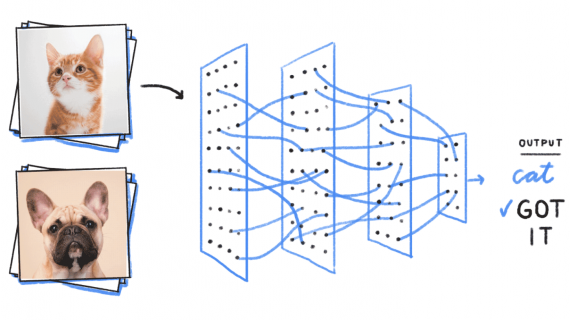
Perceptron: What It Is, How It Learns, and the Multilayer Perceptron
A perceptron is the simplest neural network: a single artificial neuron that takes several inputs, multiplies each by a weight, adds them up with a bias and outputs 1 or…
Recurrent Neural Network (RNN): How RNNs Work, Types and Examples
28 October 2026

Recurrent Neural Network (RNN): How RNNs Work, Types and Examples
A recurrent neural network (RNN) is a neural network for sequential data: text, speech, time series, video. Instead of looking at each input separately, it reads a sequence one element…
LSTM (Long Short-Term Memory): How LSTM Networks Work
27 October 2026
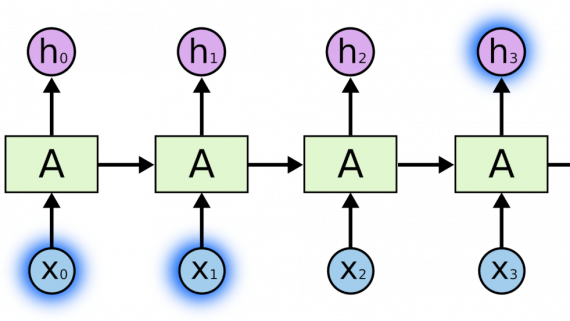
LSTM (Long Short-Term Memory): How LSTM Networks Work
Long short-term memory (LSTM) is a type of recurrent neural network designed to remember information over long sequences. An ordinary recurrent network forgets quickly: the influence of an input fades…
Supervised vs Unsupervised vs Reinforcement Learning: Differences and Examples
27 October 2026

Supervised vs Unsupervised vs Reinforcement Learning: Differences and Examples
Machine learning algorithms are usually grouped by how they learn, and in particular by what kind of feedback they get during training. In supervised learning the model learns from examples…
5 AI Strategy Programs for Marketing Leaders Without a Technical Background
26 October 2026

5 AI Strategy Programs for Marketing Leaders Without a Technical Background
Marketing teams have plenty of AI tools to choose from. The difficult part is knowing which ones deserve a place in the budget. Can an automated campaign improve conversions? Is…
StreamEval: The Best Streaming Video Generation Model Completes Only 15% of Reference Edits
26 October 2026
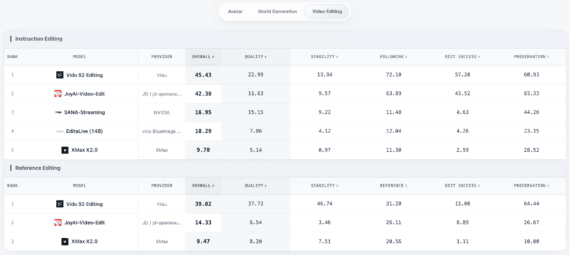
StreamEval: The Best Streaming Video Generation Model Completes Only 15% of Reference Edits
Researchers from Tsinghua University, NVIDIA, CMU, UC Berkeley, Princeton, NUS and Reactor released StreamEval, a benchmark that measures how well streaming video generation handles real-time interaction: can a model execute…
Generative Adversarial Networks (GANs): How They Work, With PyTorch Code
26 October 2026

Generative Adversarial Networks (GANs): How They Work, With PyTorch Code
A generative adversarial network (GAN) is a generative model made of two neural networks trained against each other. The generator turns random noise into fake data, such as images; the…
From Video Storage to Video Intelligence: How AI Is Transforming Cloud Surveillance Systems
26 October 2026

From Video Storage to Video Intelligence: How AI Is Transforming Cloud Surveillance Systems
Security cameras have become excellent at recording events. Finding useful information in those recordings, however, remains a challenge. Consider a business operating 100 security cameras at 2 Mbps each. Recording…
Linear Regression in Machine Learning: How It Works, With Python Examples
25 October 2026

Linear Regression in Machine Learning: How It Works, With Python Examples
Linear regression is a machine learning model that predicts a numeric value as a weighted sum of input features plus a constant: ŷ = w₁x₁ + w₂x₂ + … +…
Variational Autoencoder (VAE): How It Works, With PyTorch Code
25 October 2026

Variational Autoencoder (VAE): How It Works, With PyTorch Code
A variational autoencoder (VAE) is a generative neural network that learns to compress data into a small, smooth latent space and to generate new data from it. Like an ordinary…