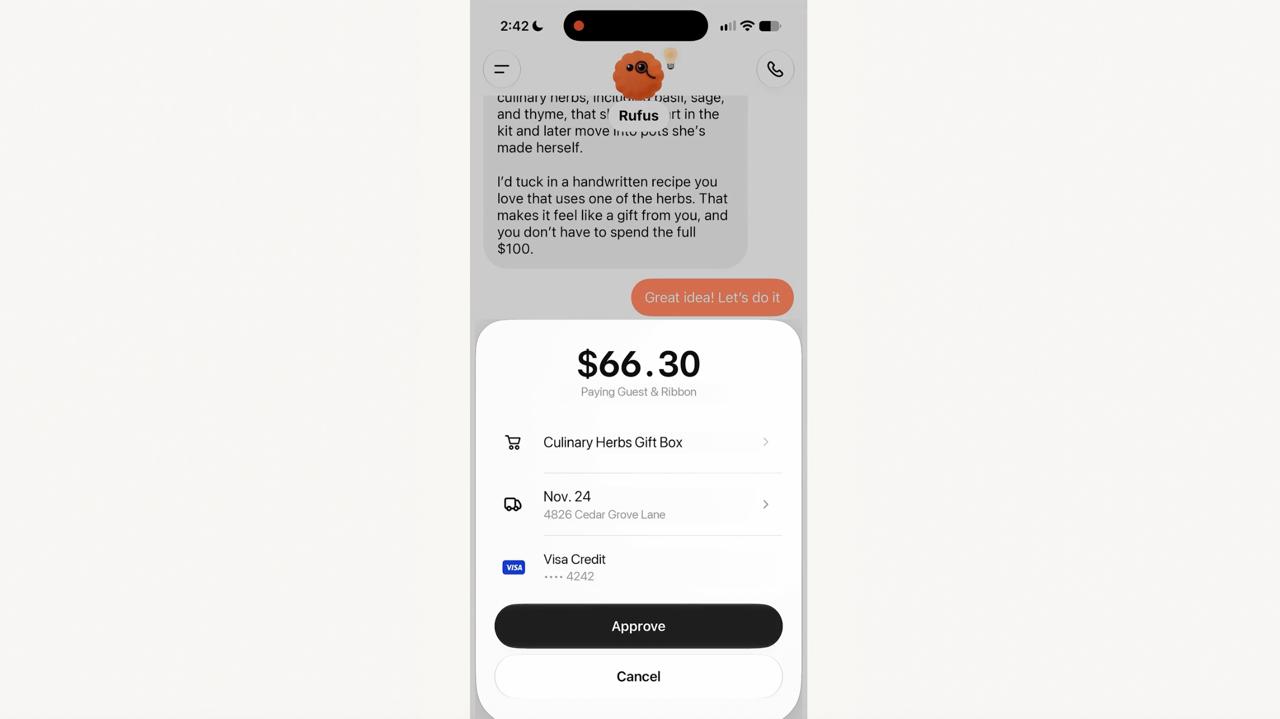
OpenAI has introduced ChatGPT Wallet, a payment service that lets AI agents pay for online purchases after receiving the user’s approval, without accessing their actual card details. Shoppers can ask an assistant to handle checkout, then review the items and total before approving payment.
The service was developed in partnership with American Express, Mastercard, and Visa. It is initially rolling out in dots, OpenAI’s personal AI agents that carry out tasks through a browser and connected apps. Access will be available to ChatGPT Pro subscribers aged 18 and older in the US with eligible US-issued cards.
How a purchase works
The user adds a card once through a secure form. The agent can find a product, prepare an order, and fill out the payment form on the merchant’s website. Before the purchase, Wallet displays the items, total, and selected card. The user reviews the details and completes a security check, such as approving the transaction with Face ID or a fingerprint scan.
After approval, the payment network issues a payment token, a digital substitute for the actual card details. It includes a card number, security code, and expiration date used to make the payment. The agent and merchant therefore receive substitute credentials, while the purchase is charged to the selected card. Wallet does not create a separate balance.
Under the service’s terms, if the shopper decides to change the order before it is submitted, Wallet will request approval again. However, the user’s approval does not guarantee a successful purchase: the bank must authorize the payment, and the merchant must accept the order.
Payments through ChatGPT Wallet retain the cashback and other rewards provided under the card’s terms. Shoppers can also dispute a charge through their bank, for example, if they are charged twice or without their authorization. The merchant remains responsible for the product, delivery, and returns.
What merchants need to do
Alongside Wallet, OpenAI has released the Commerce Partner Playbook, a set of guidelines for businesses that want to serve customers using AI agents. It covers providing up-to-date catalogs, prices, and stock availability, allowing agents to access websites, and enabling actions such as managing shopping carts.
Wallet is designed to work with existing checkout forms, but compatibility is not yet universal. Website security measures may block the agent, while payment screening systems may reject a legitimate purchase. Merchants are therefore encouraged to check that agents can access their websites and work with their payment partners to support these transactions.
Will agents be able to make purchases without approval?
At launch, users must approve each purchase individually. In the future, OpenAI plans to let users fully delegate purchases within predefined limits, such as a budget, product categories, and a period during which the authorization remains valid. The company has not yet announced when this feature will become available.
With Wallet, the agent can handle checkout and prepare the payment, leaving the user to review the items and total before confirming the purchase. For now, the service is available to a limited group of users and will not work everywhere: some websites and payment systems may block purchases made through AI agents.