


The latest AI research, explained: we pick papers that leave you with something to do — a model to run, a method to reproduce, numbers to check — and break down what the authors propose, how it works and what results they report. The feed above lists every breakdown, newest first.
Research areas and recent breakdowns
| Area | What we cover | Recent breakdowns | Full topic |
|---|---|---|---|
| Language and multimodal models | New open models, training and reasoning methods | VideoJev, LLaVA-OneVision-2, Multiplex Thinking | Open LLMs |
| AI agents | Harnesses, agent training and evaluation | WeVisForensics, RRSI, Agent Lightning | AI agents |
| Image and video | Generation and editing, including real time | FastFrames, JoyAI-Video-Edit, Helios | Image & video |
| World models and robots | World simulation, 3D scenes, robot control | Reflex, WorldSculpt, TurboVLA | World models |
| Small models | Quantization and models for a phone, a laptop or a single GPU | Bonsai 27B, LFM2.5-230M, QeRL | Local models |
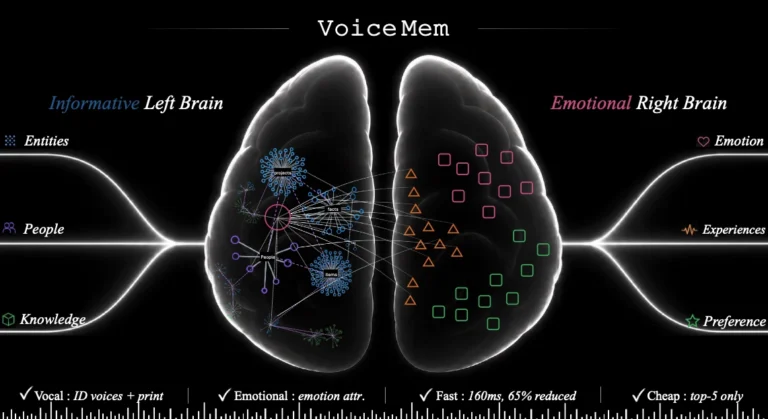
| Voice and music | Song generation, memory for voice assistants, voice deepfakes | YuE2, VoiceMem, VeriSpoof | This feed only |
| Science and medicine | Proteins, medical imaging, clinical consultations | ESM Cambrian, MedSAM2, Baichuan-M3 | This feed only |
| Benchmarks | How models are measured and where they fail | StreamEval, GPT-6-Astra and robots, backend benchmark | Benchmarks |
Data as of November 22, 2026.
What every breakdown covers
Each breakdown answers the same questions: what is new and how it differs from earlier approaches, which benchmarks and baselines the authors used, and what the numbers say. Below the text you will find links to the original source and, when the authors released them, to the code on GitHub and the weights on Hugging Face.
The numbers in a breakdown are the authors’ own results on tests they chose. How to read such tables, and how a reported result differs from an independent measurement, is covered in Benchmarks.
Release news goes out on announcement day and lives in News. A breakdown follows once there is a paper, code or weights, so the claims can be checked.
How we choose papers
Open weights and code come first: you can run the model and verify the results yourself. That is how Bonsai 27B, a 27B-parameter model running on a smartphone, and YuE2, an open-source song generator, got into the feed. We cover closed work when the result changes the picture, such as the study of whether GPT-6-Astra has reached embodied intelligence.
New here? Start with three breakdowns: the Kimi K3 review shows how a flagship open-weight model is built, MIRA is a world model that simulates Rocket League end to end, and Multiplex Thinking is a method that lifts accuracy on olympiad problems from 40% to 55%.
Where to look by topic
The larger areas have their own pages, listed in the last column of the table. Releases of commercial models are collected in Proprietary models, and explainers on how neural networks are built and trained are in AI basics.