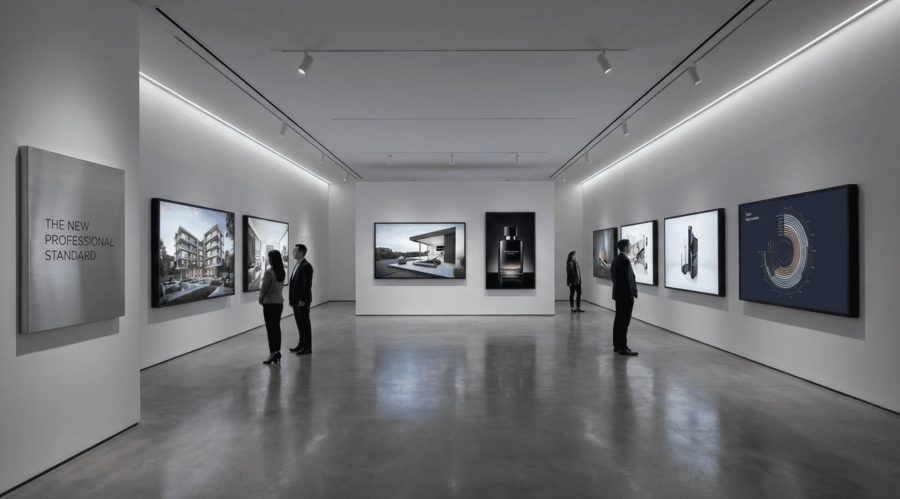
The era of AI as a curiosity is officially over. For years, creative professionals used generative imagery as a brainstorming tool rather than a final production engine. This was largely due to the “uncanny valley” effect. While AI could create impressive landscapes, it often failed at the granular details required for commercial viability.
The shift toward professional-grade utility is now accelerating. We are seeing a move away from whimsical, distorted aesthetics toward what many are calling “Studio-Grade Output.” This transition is driven by the need for precision, accuracy, and reliability in commercial environments.
The Problem: The Post-Processing Trap in Generative Art
In the early stages of AI adoption, marketing teams faced a significant hurdle. They could generate a stunning background in seconds, but the core elements were often flawed. Common issues included distorted human features, “garbled text” in logos, and an inability to maintain character consistency across different shots.
These flaws meant that designers had to spend hours in post-production. They were essentially fixing the AI’s mistakes. This negated the primary benefit of the technology: efficiency. If an image requires two hours of manual retouching to be usable for a social media ad, the “instant” nature of AI disappears.
Furthermore, the lack of high-resolution native output was a major pain point. Professional signage and packaging require extreme clarity. Low-resolution generations that look good on a smartphone screen often fall apart when printed on a physical product or displayed on a 4K monitor.
The Technical Evolution of Professional AI Standards
The industry is now witnessing the arrival of models that prioritize precision over mere novelty. These tools are designed to produce final, production-ready assets that require zero post-processing. They solve the most frustrating aspect of AI: the lack of control over specific details.
When professional designers utilize GPT Image 2, they are no longer just rolling the dice on a prompt. They are engaging with a system designed for 95% text accuracy and high-fidelity textures. This level of technical reliability allows for the creation of marketing assets that are ready for immediate deployment.
The benchmark for image-to-text and text-to-image coherence has reached a point where AI performance is rivaling human-level perception in specific commercial categories. This indicates that the floor for “acceptable” quality has been permanently raised.
Typography That Ships: Solving the Text Problem
One of the biggest breakthroughs in GPT Image 2 is the mastery of typography. Historically, AI models treated text as a visual texture rather than a semantic instruction. This resulted in the infamous “alphabet soup” that ruined otherwise perfect product shots.
Today, professional models support complex typography across multiple languages. This includes:
- Pixel-perfect English lettering for logos and branding.
- Support for complex CJK (Chinese, Japanese, Korean) characters.
- Accurate placement of text on curved surfaces, such as bottles or packaging.
- Legible fine print for legal disclaimers on digital ads.
This capability is essential for international brands. A marketing studio can now generate a localized campaign for five different countries in one afternoon. The text stays crisp, the brand voice remains consistent, and the technical quality remains at a 4K native resolution.
Beyond the Prompt: Consistency and Asset Continuity
A major challenge in professional workflows is maintaining brand consistency. In a traditional cinema studio, a character or product must look identical across every frame. Early AI struggled with this, often changing a person’s facial structure or a product’s color scheme between generations.
Modern platforms like higgsfield solve this by offering advanced character and asset consistency tools. This allows creators to lock in specific visual elements. Once a brand mascot or a product prototype is defined, it can be placed in any environment or lighting condition without losing its identity.
This continuity is the “holy grail” for storyboarding and long-term marketing campaigns. It allows a brand to build a cohesive visual narrative without the expense of a multi-day location shoot. The focus shifts from the “magic” of generation to the “efficiency” of actual production.
Strategy: How to Use High-Fidelity AI for Commercial Success
To capitalize on the power of GPT Image 2, professionals should rethink their creative workflows. It is no longer about finding a “cool” image. It is about building a scalable visual system. Here are three strategies to implement today:
- Direct-to-Packaging Design: Use AI to visualize your product in real-world scenarios. With accurate text rendering, you can see exactly how a label will look under professional studio lighting.
- Rapid Storyboarding for Cinema: Instead of rough sketches, use high-fidelity models to create “living” storyboards. This gives stakeholders a clear vision of the final cinematography before a single camera is rented.
- Dynamic Ad Personalization: Generate thousands of variants of a single ad concept. Each variant can feature localized text and culturally relevant backgrounds while keeping the core asset identical.
By using higgsfield, teams can access a unified platform that integrates various top-tier models. This includes specialized engines like Higgsfield Soul for professional aesthetics and Seedream for highly creative, conceptual work.
Integrating AI into the Marketing Studio Workflow
The modern marketing studio requires a toolset that is both flexible and powerful. It is not enough to have a single good model. You need a specialized workflow that allows for a seamless transition from a static image to a motion asset.
Higgsfield provides this bridge. By unifying models like Flux.1 and Nano Banana Pro into a single interface, it simplifies the complex task of AI asset management. The platform is built for the “Pro-Grade Standard,” ensuring that every output meets the requirements of a high-end agency.
In this environment, GPT Image 2 acts as the backbone of the visual content. It provides the clarity and text accuracy needed for the initial asset. From there, the platform’s video conversion tools can breathe life into the imagery, creating a complete content ecosystem.
Why 4K Native Resolution is No Longer Optional
In the world of professional photography, resolution is everything. It dictates where an image can be used. A low-resolution image is trapped on a social feed. A 4K native image can be used for:
- In-store digital displays.
- High-end print brochures.
- Backgrounds for large-scale video productions.
- Website hero images on ultra-wide monitors.
GPT Image 2 ensures that these pixels are not just upscaled but are natively generated with high density. This eliminates the “plastic” look that often plagues AI-generated skin or metallic surfaces. The result is a photorealistic finish that stands up to the scrutiny of professional art directors.
The Future of Visual Production with Higgsfield
As we look toward the future, the distinction between “AI-generated” and “traditionally produced” content will continue to blur. The winners in the creative industry will be those who embrace these tools to enhance their output rather than replace their creativity.
The community at higgsfield, which now exceeds 22 million users, is a testament to this shift. These users are not just hobbyists. They are designers, marketers, and filmmakers who demand a high level of control. They are using GPT Image 2 to push the boundaries of what is possible in digital storytelling.
By removing the technical barriers of garbled text and inconsistent assets, AI is finally fulfilling its promise. It is becoming a silent partner in the creative process, allowing humans to focus on the big ideas while the machine handles the heavy lifting of pixel-perfect execution.
Conclusion: Setting the New Standard
The floor for professional visual content has been raised. It is no longer impressive to simply generate a face or a sunset. The new standard requires 4K clarity, perfect typography, and absolute consistency.
Tools like GPT Image 2 have made these high-level requirements accessible to any marketing studio or independent creator. By leveraging the power of higgsfield, professionals can bypass the limitations of early AI and move directly into high-fidelity production.
The shift is clear: we are moving from a world of AI experimentation to an era of commercial delivery. Those who master these “Pro-Grade” tools today will define the visual landscape of tomorrow. Accuracy is the new creative currency, and it is more accessible than ever before.

This was a helpful read. The way you explained “How GPT Image 2 Is Raising the Floor for What Counts as Professional Visual Content” made the main point much clearer.