Gemini 4 Hydrogen: Smarter, Faster and Cheaper per Task Than Gemini 3.8 Flash, Now Powering Google Search
13 November 2026
Gemini 4 Hydrogen: Smarter, Faster and Cheaper per Task Than Gemini 3.8 Flash, Now Powering Google Search
Google has released Gemini 4 Hydrogen, a model for writing code, working with documents and handling multi-step tasks that replaces Gemini 3.8 Flash. According to the company, it completes test…
AlphaGenome 2: DeepMind Model Finds Nearly Twice as Many Gene-Altering DNA Variants in Specific Cell Types
12 November 2026
AlphaGenome 2: DeepMind Model Finds Nearly Twice as Many Gene-Altering DNA Variants in Specific Cell Types
Google DeepMind unveiled AlphaGenome 2 on November 11, 2026 – a model that predicts how DNA variants change gene activity in specific human cell types. According to the developers, on…
Semantic Segmentation: How It Works, From U-Net to Segment Anything
12 November 2026
Semantic Segmentation: How It Works, From U-Net to Segment Anything
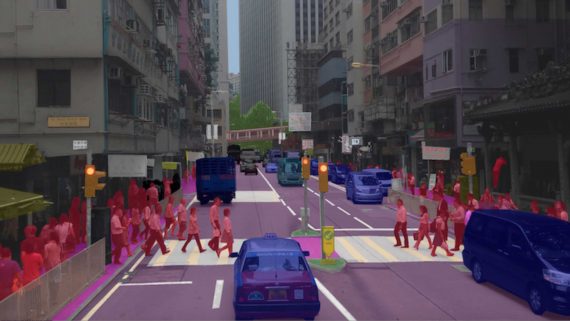
Semantic segmentation is the computer vision task of assigning a class label to every pixel of an image: this pixel is road, that one is a pedestrian, those are sky.…
MiniMax H3-Image: Open-Weight Model Generates Native 4K Images in 10-16 Seconds
11 November 2026
MiniMax H3-Image: Open-Weight Model Generates Native 4K Images in 10-16 Seconds
MiniMax has released MiniMax H3-Image, an open-weight model for image generation and editing. The same checkpoint creates images from text and edits existing ones. For editing, it takes up to…
VeriSpoof: Open Audio LLM Detects Voice Deepfakes With 98% Accuracy
11 November 2026

VeriSpoof: Open Audio LLM Detects Voice Deepfakes With 98% Accuracy
Researchers from the University of Melbourne presented VeriSpoof, an open audio language model (audio LLM) for audio deepfake detection and speech forensics. It handles five tasks at once, each of…
Qwen4-Max Preview: 1M-Token Context, Access From $3 and Up to 80% Off for 15 Days
11 November 2026
Qwen4-Max Preview: 1M-Token Context, Access From $3 and Up to 80% Off for 15 Days
Alibaba has opened early access to Qwen4-Max, the flagship of its next-generation Qwen family – but only for 15 days: the preview will be switched off after November 25. During…
How AI Is Making Corporate Training More Adaptive and Scalable
10 November 2026

How AI Is Making Corporate Training More Adaptive and Scalable
A regional operations manager at a logistics company once described her onboarding program as a very expensive calendar invite. Forty new hires a quarter, the same three-day session, the same…
Claude Fable 5.2 and Mythos 5.2: 20% Cheaper Than 5.1 and Ahead of Opus 5.5 on Almost Every Anthropic Benchmark
10 November 2026

Claude Fable 5.2 and Mythos 5.2: 20% Cheaper Than 5.1 and Ahead of Opus 5.5 on Almost Every Anthropic Benchmark
A thousand Claude Fable 5.2 agents formalized the proof of Fermat’s Last Theorem in 30 hours, translating it into a language in which a computer checks every step. That is…
Autoencoders: How Neural Networks Learn to Compress, Denoise and Detect Anomalies
9 November 2026
Autoencoders: How Neural Networks Learn to Compress, Denoise and Detect Anomalies
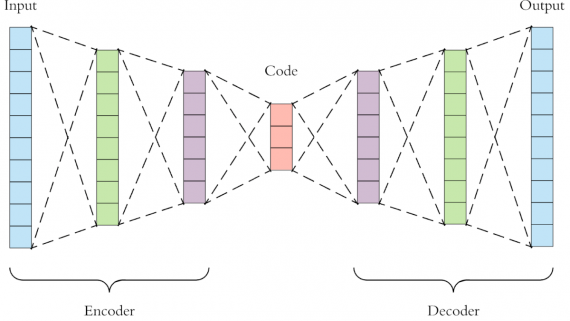
An autoencoder is a neural network that learns to copy its input to its output through a narrow bottleneck. Because it cannot simply pass every number through, it has to…
Automated Smartphone Diagnostics vs. Manual Testing: What Changes at Scale?
9 November 2026

Automated Smartphone Diagnostics vs. Manual Testing: What Changes at Scale?
Quick Answer: Is Automated Smartphone Testing Better for High-Volume Operations? For businesses processing large numbers of used smartphones, automated diagnostics can standardize testing and reduce repetitive manual work. Manual testing…
Kaggle Titanic Tutorial: Predicting Survival With Python, Step by Step
8 November 2026

Kaggle Titanic Tutorial: Predicting Survival With Python, Step by Step
The Titanic competition is the classic first project on Kaggle: given data about 891 passengers, predict who survived the sinking of the Titanic in April 1912. It is small enough…
Artificial Intelligence: How AI Works and How to Create Your Own AI Model
7 November 2026

Artificial Intelligence: How AI Works and How to Create Your Own AI Model
Artificial intelligence (AI) is the field of computer science that builds machines able to do things we normally associate with human intelligence: understanding language, recognising images, solving problems, making decisions…
Image Super Resolution: How AI Upscaling Works, From SRCNN to Diffusion
7 November 2026

Image Super Resolution: How AI Upscaling Works, From SRCNN to Diffusion
Image super resolution is the task of turning a low-resolution image into a sharper, higher-resolution one. It is what an “AI upscaler” does when it enlarges an old photo, what…
Best Vendor for Agent-to-Agent Governance at Scale in 2026
5 November 2026

Best Vendor for Agent-to-Agent Governance at Scale in 2026
Single-agent deployments are giving way to systems where agents call other agents, delegate subtasks, and coordinate across teams and clouds. That topology multiplies the governance problem: every agent-to-agent hop needs…
Cloud GPU Pricing in 2026: What It Costs to Rent an H100, B200 or RTX 5090
5 November 2026
Cloud GPU Pricing in 2026: What It Costs to Rent an H100, B200 or RTX 5090
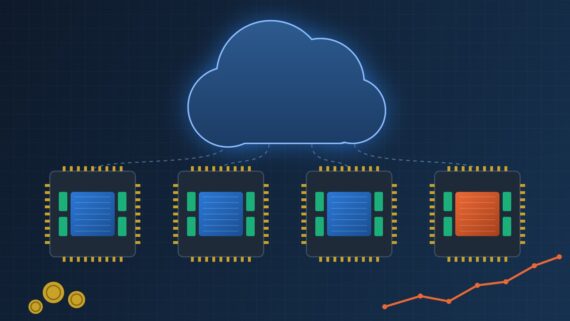
Renting a GPU in the cloud is the fastest way to get serious compute for deep learning: no hardware to buy, no drivers to fight with on your own machine,…
Word2vec and Word Embeddings: How Computers Learn the Meaning of Words
5 November 2026
Word2vec and Word Embeddings: How Computers Learn the Meaning of Words
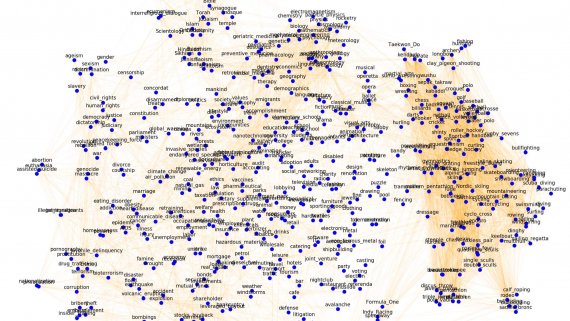
Word2vec is a method for turning words into vectors, lists of numbers, so that words with similar meanings get similar vectors. It was published by Tomas Mikolov and colleagues at…
PyTorch Tutorial for Beginners: From Installation to Your First Neural Network
3 November 2026
PyTorch Tutorial for Beginners: From Installation to Your First Neural Network
PyTorch is the most widely used deep learning framework in 2026: it powers most research papers, almost all open large language models and the tools around them, from Hugging Face…
Deep Learning: How Many-Layered Neural Networks Learn From Raw Data
3 November 2026
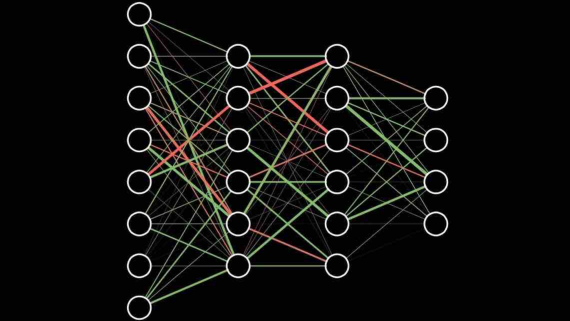
Deep Learning: How Many-Layered Neural Networks Learn From Raw Data
Deep learning is the part of machine learning that trains artificial neural networks with many layers to learn directly from raw data: pixels, sound waves, text. Instead of a programmer…
Recommender Systems: How Recommendation Engines Work, With Python Code
2 November 2026

Recommender Systems: How Recommendation Engines Work, With Python Code
A recommender system is software that predicts what a person is likely to want next and shows it to them: the next video on YouTube, the “customers also bought” row…
How Neural Networks Work: Neurons, Layers and Training, Step by Step
1 November 2026
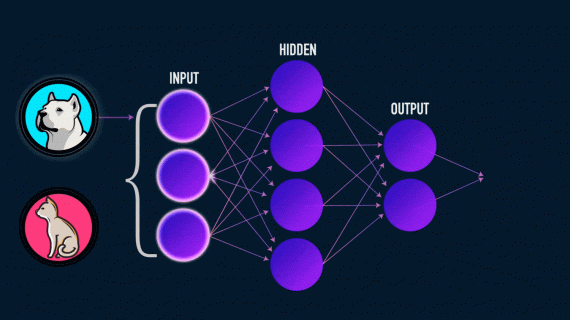
How Neural Networks Work: Neurons, Layers and Training, Step by Step
Neural networks recognize faces in photos, translate text, recommend videos and power chatbots such as ChatGPT and Claude. Under the hood, every one of them runs the same simple idea:…
PyTorch vs TensorFlow in 2026: Differences, Code Comparison and Which to Choose
30 October 2026
PyTorch vs TensorFlow in 2026: Differences, Code Comparison and Which to Choose
For years “PyTorch or TensorFlow?” was the first question in any deep learning course. In 2026 the answer has become much clearer. PyTorch is the default framework for research, large…