Skip to content
    Neurohive
    • News
    • Open LLMs
    • AI agents
    • Local models
    • Image & video
    RU

    Topics

    • Open LLMsOpen-weight models compared: quality, price and how to pick one
    • AI agentsAgents for coding, research and computer use: frameworks, benchmarks, comparisons
    • Image & videoImage and video generation and editing: models and services
    • Local modelsRunning models on your own hardware: VRAM, quantization, inference
    • AI basicsHow machine learning and neural networks work: explainers with formulas and Python code
    • BenchmarksWhat benchmarks measure and how to read launch-day numbers
    • World modelsWorld models, 3D scenes and robots: demos, code, what you can run
    • Proprietary modelsGPT, Gemini, Claude and other closed-weight models: pricing, tests, reviews
    • AI researchNew AI papers and models explained: what was proposed, the numbers, where the code is

    Sections

    • AI Apps
    • Datasets

    Neurohive

    • Contact Us
    News Open LLMs AI agents Image & video Local models AI basics Benchmarks World models Proprietary models AI research
    Neurohive
    News›

    Topics

    • Open LLMs
    • AI agents
    • Image & video
    • Local models
    • AI basics
    • Benchmarks
    • World models
    • Proprietary models
    • AI research

    Sections

    AI Apps Datasets

    Neurohive

    Contact Us
    Русский
    Home → AI basics: machine learning and neural networks explained → Page 2
    Topic

    AI basics: machine learning and neural networks explained

    3 November AI basics

    Deep Learning: How Many-Layered Neural Networks Learn From Raw Data

    Deep learning is the part of machine learning that trains artificial neural networks with many layers to learn directly from raw data: pixels, sound waves, text. Instead of a…

    2 November AI basics

    Recommender Systems: How Recommendation Engines Work, With Python Code

    A recommender system is software that predicts what a person is likely to want next and shows it to them: the next video on YouTube, the “customers also bought” row…

    28 October AI basics

    Perceptron: What It Is, How It Learns, and the Multilayer Perceptron

    A perceptron is the simplest neural network: a single artificial neuron that takes several inputs, multiplies each by a weight, adds them up with a bias and outputs 1 or 0…

    1 November AI basics

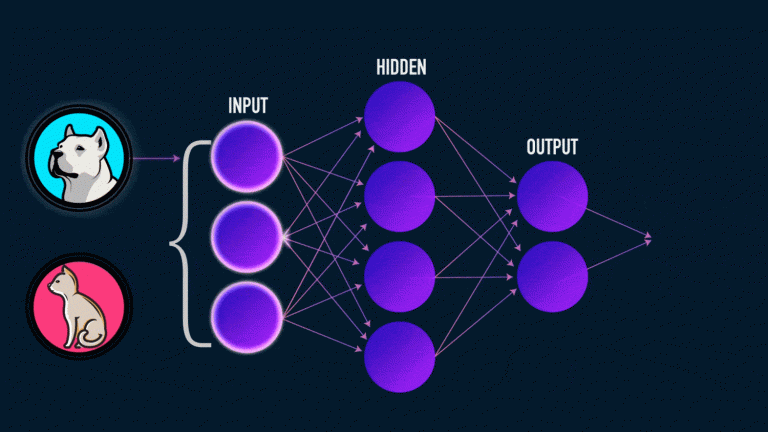
    How Neural Networks Work: Neurons, Layers and Training, Step by Step

    Neural networks recognize faces in photos, translate text, recommend videos and power chatbots such as ChatGPT and Claude. Under the hood, every one of them runs the same simple…

    25 October AI basics

    Variational Autoencoder (VAE): How It Works, With PyTorch Code

    A variational autoencoder (VAE) is a generative neural network that learns to compress data into a small, smooth latent space and to generate new data from it. Like an ordinary…

    3 November AI basics

    PyTorch Tutorial for Beginners: From Installation to Your First Neural Network

    PyTorch is the most widely used deep learning framework in 2026: it powers most research papers, almost all open large language models and the tools around them, from Hugging…

    24 October AI basics

    Decision Trees in Machine Learning: How They Work, With Python Examples

    A decision tree is a machine learning model that makes predictions by asking a sequence of yes/no questions about the input, such as “Is the departure time before…

    23 October AI basics

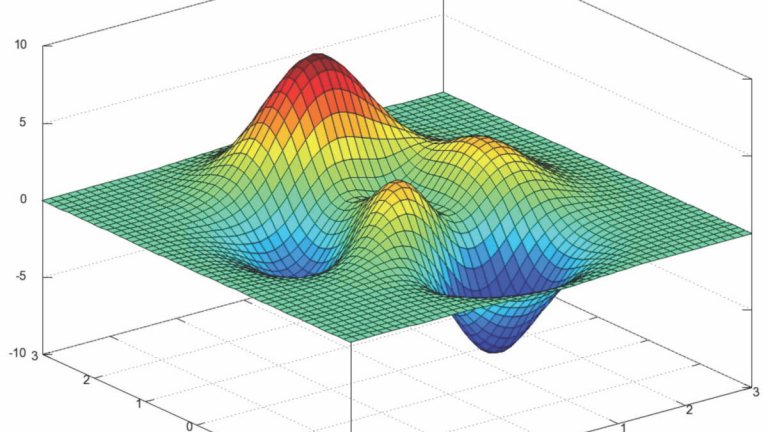
    Gradient Descent Explained: Algorithm, Types and Python Code

    Gradient descent is the algorithm that trains almost every machine learning model: it repeatedly nudges the model’s parameters in the direction that lowers the loss, using…

    8 November AI basics

    Kaggle Titanic Tutorial: Predicting Survival With Python, Step by Step

    The Titanic competition is the classic first project on Kaggle: given data about 891 passengers, predict who survived the sinking of the Titanic in April 1912. It is small enough…

    26 October AI basics

    Generative Adversarial Networks (GANs): How They Work, With PyTorch Code

    A generative adversarial network (GAN) is a generative model made of two neural networks trained against each other. The generator turns random noise into fake data, such as…

    28 October AI basics

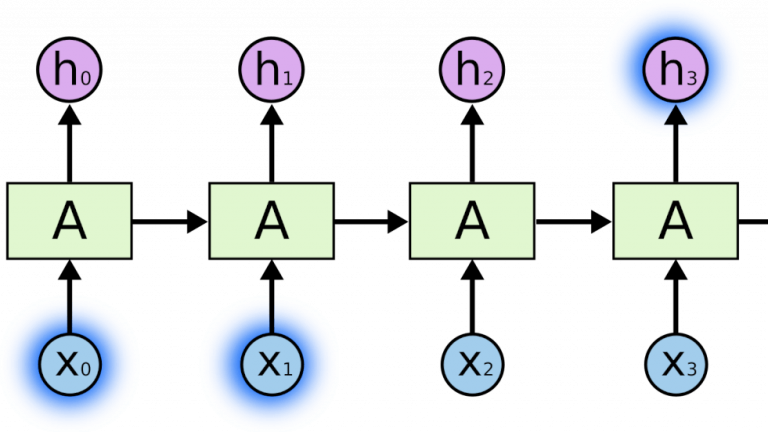
    Recurrent Neural Network (RNN): How RNNs Work, Types and Examples

    A recurrent neural network (RNN) is a neural network for sequential data: text, speech, time series, video. Instead of looking at each input separately, it reads a sequence one…

    27 October AI basics

    LSTM (Long Short-Term Memory): How LSTM Networks Work

    Long short-term memory (LSTM) is a type of recurrent neural network designed to remember information over long sequences. An ordinary recurrent network forgets quickly: the…

    ← Newer123Older →
    Neurohive

    Neurohive — AI news. Open models, guides, reviews and comparisons.

    Topics

    • Open LLMs
    • AI agents
    • Image & video
    • Local models
    • AI basics
    • Benchmarks
    • World models
    • Proprietary models
    • AI research

    Sections

    • News
    • AI Apps
    • Datasets

    Neurohive

    • Contact Us
    • Русская версия
    • RSS
    © 2018–2026 Neurohive Neural network news and research