Cloud GPU Pricing in 2026: What It Costs to Rent an H100, B200 or RTX 5090

5 November 2026

Illustration: GPU chips connected to a cloud, with a rising price line

Cloud GPU Pricing in 2026: What It Costs to Rent an H100, B200 or RTX 5090

Renting a GPU in the cloud is the fastest way to get serious compute for deep learning: no hardware to buy, no drivers to fight with on your own machine,…


PyTorch Tutorial for Beginners: From Installation to Your First Neural Network

3 November 2026
pytorch туториал

PyTorch Tutorial for Beginners: From Installation to Your First Neural Network

PyTorch is the most widely used deep learning framework in 2026: it powers most research papers, almost all open large language models and the tools around them, from Hugging Face…

Recommender Systems: How Recommendation Engines Work, With Python Code

2 November 2026

Recommender Systems: How Recommendation Engines Work, With Python Code

A recommender system is software that predicts what a person is likely to want next and shows it to them: the next video on YouTube, the “customers also bought” row…

How Neural Networks Work: Neurons, Layers and Training, Step by Step

1 November 2026
нейронная сеть

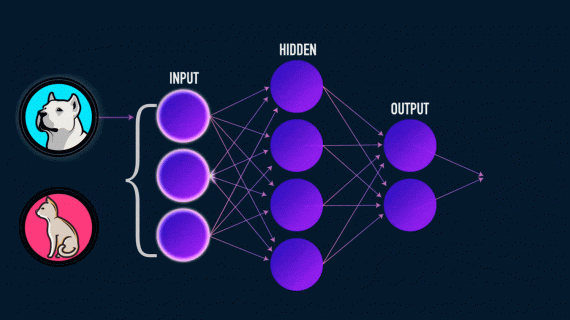
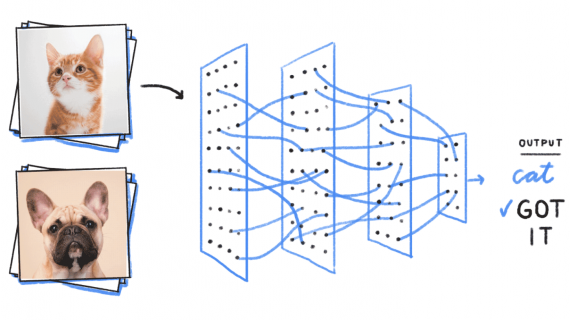
How Neural Networks Work: Neurons, Layers and Training, Step by Step

Neural networks recognize faces in photos, translate text, recommend videos and power chatbots such as ChatGPT and Claude. Under the hood, every one of them runs the same simple idea:…

PyTorch vs TensorFlow in 2026: Differences, Code Comparison and Which to Choose

30 October 2026
pytorch tensorflow сходства и отличия

PyTorch vs TensorFlow in 2026: Differences, Code Comparison and Which to Choose

For years “PyTorch or TensorFlow?” was the first question in any deep learning course. In 2026 the answer has become much clearer. PyTorch is the default framework for research, large…

Epoch vs Batch Size vs Iteration in Machine Learning

28 October 2026
эпоха итерации батчи (batch size)

Epoch vs Batch Size vs Iteration in Machine Learning

If you have trained a neural network, you have written something like model.fit(X, y, epochs=10, batch_size=32) and wondered what exactly the numbers mean and how they relate to the “steps”…

Perceptron: What It Is, How It Learns, and the Multilayer Perceptron

28 October 2026
персептрон что такое

Perceptron: What It Is, How It Learns, and the Multilayer Perceptron

A perceptron is the simplest neural network: a single artificial neuron that takes several inputs, multiplies each by a weight, adds them up with a bias and outputs 1 or…

Recurrent Neural Network (RNN): How RNNs Work, Types and Examples

28 October 2026
рекуррентные нейронные сети

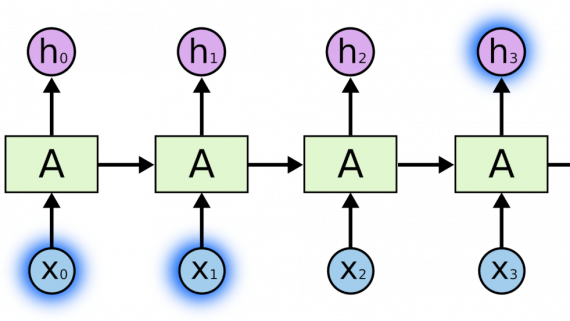
Recurrent Neural Network (RNN): How RNNs Work, Types and Examples

A recurrent neural network (RNN) is a neural network for sequential data: text, speech, time series, video. Instead of looking at each input separately, it reads a sequence one element…

LSTM (Long Short-Term Memory): How LSTM Networks Work

27 October 2026
сети LSTM

LSTM (Long Short-Term Memory): How LSTM Networks Work

Long short-term memory (LSTM) is a type of recurrent neural network designed to remember information over long sequences. An ordinary recurrent network forgets quickly: the influence of an input fades…

Supervised vs Unsupervised vs Reinforcement Learning: Differences and Examples

27 October 2026
обучение с без учителя, с подкреплением

Supervised vs Unsupervised vs Reinforcement Learning: Differences and Examples

Machine learning algorithms are usually grouped by how they learn, and in particular by what kind of feedback they get during training. In supervised learning the model learns from examples…

Generative Adversarial Networks (GANs): How They Work, With PyTorch Code

26 October 2026
генеративно-состязательная нейросеть GAN

Generative Adversarial Networks (GANs): How They Work, With PyTorch Code

A generative adversarial network (GAN) is a generative model made of two neural networks trained against each other. The generator turns random noise into fake data, such as images; the…

Linear Regression in Machine Learning: How It Works, With Python Examples

25 October 2026
линейная регрессия

Linear Regression in Machine Learning: How It Works, With Python Examples

Linear regression is a machine learning model that predicts a numeric value as a weighted sum of input features plus a constant: ŷ = w₁x₁ + w₂x₂ + … +…

Variational Autoencoder (VAE): How It Works, With PyTorch Code

25 October 2026
вариационный автоэнкодер vae

Variational Autoencoder (VAE): How It Works, With PyTorch Code

A variational autoencoder (VAE) is a generative neural network that learns to compress data into a small, smooth latent space and to generate new data from it. Like an ordinary…

Convolutional Neural Networks (CNN): How They Work, Step by Step

25 October 2026
сверточная нейронная сеть пример

Convolutional Neural Networks (CNN): How They Work, Step by Step

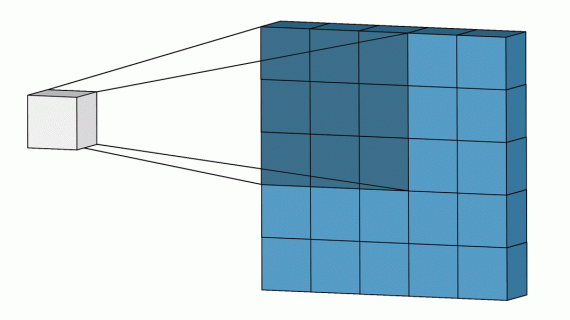
A convolutional neural network (CNN, or ConvNet) is a type of neural network designed for data with a grid structure, above all images. Instead of connecting every input pixel to…

Decision Trees in Machine Learning: How They Work, With Python Examples

24 October 2026
дерево решений

Decision Trees in Machine Learning: How They Work, With Python Examples

A decision tree is a machine learning model that makes predictions by asking a sequence of yes/no questions about the input, such as “Is the departure time before 8:15?” or…

Backpropagation Explained: Algorithm, Example and Python Code

24 October 2026
обратное распространение

Backpropagation Explained: Algorithm, Example and Python Code

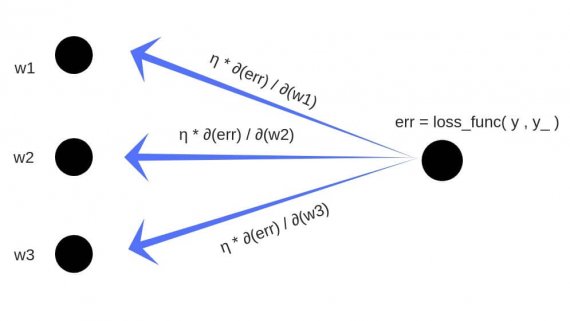
Backpropagation (backward propagation of errors) is the algorithm that computes how much each weight in a neural network contributed to the error, so that gradient descent can adjust it. It…

Gradient Boosting Explained: Algorithm, Python Code, XGBoost vs LightGBM

24 October 2026
градиентный бустинг

Gradient Boosting Explained: Algorithm, Python Code, XGBoost vs LightGBM

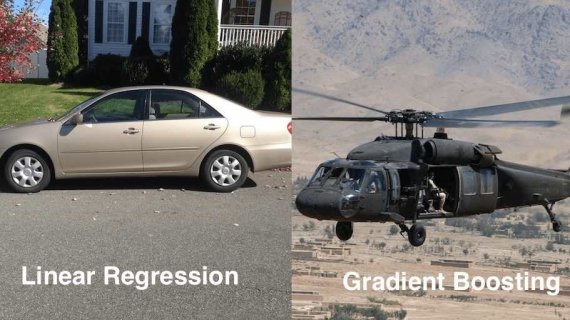
Gradient boosting is a machine learning technique that builds a strong model from many weak ones, usually small decision trees, by adding them one at a time. Each new tree…

Activation Functions in Neural Networks: ReLU, Sigmoid, GELU and More

23 October 2026
функции активации нейронной сети

Activation Functions in Neural Networks: ReLU, Sigmoid, GELU and More

An activation function is the small nonlinear function a neuron applies to its weighted input before passing the result on: a = f(w · x + b). Without it, a…

Gradient Descent Explained: Algorithm, Types and Python Code

23 October 2026
градиентный спуск метод

Gradient Descent Explained: Algorithm, Types and Python Code

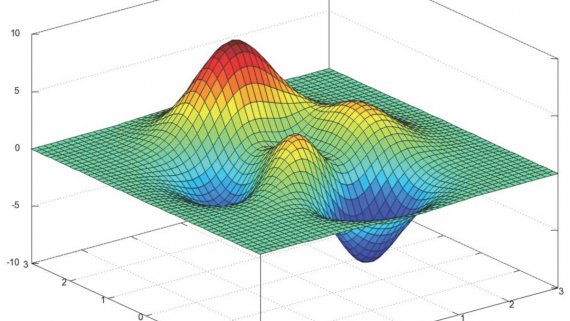
Gradient descent is the algorithm that trains almost every machine learning model: it repeatedly nudges the model’s parameters in the direction that lowers the loss, using the update rule θ…

Bayes’ Theorem Explained: Formula, Examples and Python Code

23 October 2026
Теорема Байеса пример

Bayes’ Theorem Explained: Formula, Examples and Python Code

Bayes’ theorem tells you how to update a probability when new evidence arrives: the probability of a hypothesis given the evidence equals the probability of the evidence given the hypothesis,…

Step-by-Step Guide to Integrate Python Weather API

27 September 2024
python weather api

Step-by-Step Guide to Integrate Python Weather API

Weather forecast is now something that we all receive regularly and use in many decisions from dressing code to the selection of a time to schedule an event outdoors. The…