Backpropagation Explained: Algorithm, Example and Python Code

24 February 2026
обратное распространение

Backpropagation Explained: Algorithm, Example and Python Code

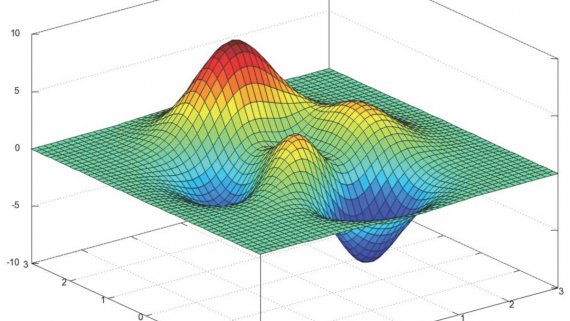
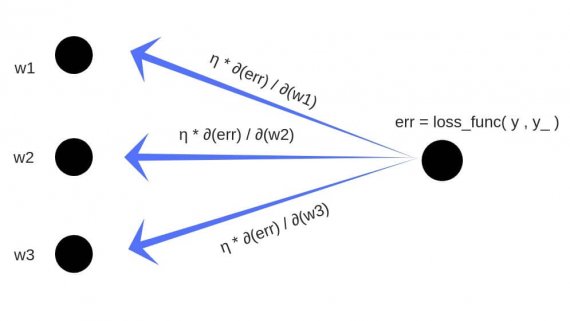
Backpropagation (backward propagation of errors) is the algorithm that computes how much each weight in a neural network contributed to the error, so that gradient descent can adjust it. It…

Claude Sonnet 4.5 Leads on Comprehensive Backend Benchmark, Outperforming in Both Code and Environment Configuration

22 January 2026
abc-bench-pipeline-workflow

Claude Sonnet 4.5 Leads on Comprehensive Backend Benchmark, Outperforming in Both Code and Environment Configuration

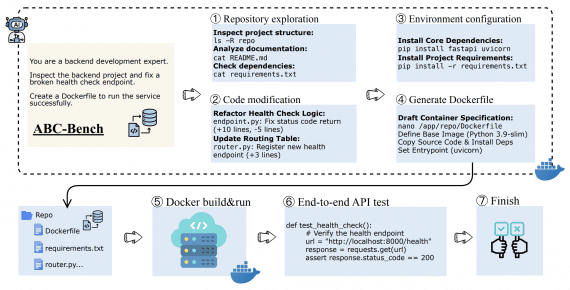
A team of researchers from Fudan University and Shanghai Qiji Zhifeng Co. introduced ABC-Bench — the first benchmark that tests the ability of AI agents to solve full-fledged backend development…

Activation Functions in Neural Networks: ReLU, Sigmoid, GELU and More

23 November 2025
функции активации нейронной сети

Activation Functions in Neural Networks: ReLU, Sigmoid, GELU and More

An activation function is the small nonlinear function a neuron applies to its weighted input before passing the result on: a = f(w · x + b). Without it, a…

From Millions Spent on “Thank You” to Efficient Inference: Boilerplate Detection in a Single Token

31 October 2025
Detecting Boilerplate Responses LLM

From Millions Spent on “Thank You” to Efficient Inference: Boilerplate Detection in a Single Token

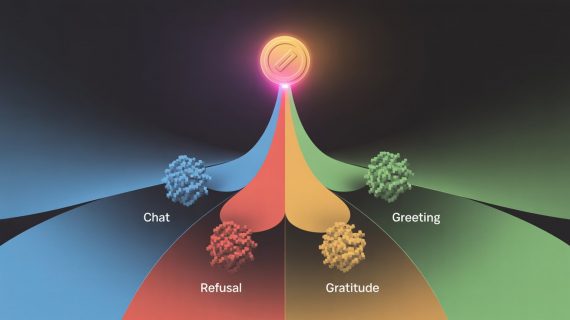
Researchers from JFrog published a study demonstrating a method for early detection of boilerplate responses in large language models after generating just a single token. The method enables computational cost…

How To Choose A Generative AI Platform

26 August 2025
How to choose a generative ai platform

How To Choose A Generative AI Platform

Most teams outgrow single-model tools once they need governance, repeatability, and multi-model routing. This guide shows what belongs in a Generative AI platform and how to evaluate options with architecture-level…

MiniCPM4: Open Local Model Achieves Qwen3-8B Performance with 7x Inference Acceleration

15 June 2025
end devices llm

MiniCPM4: Open Local Model Achieves Qwen3-8B Performance with 7x Inference Acceleration

The OpenBMB research team presented MiniCPM4 — a highly efficient language model designed specifically for local devices. MiniCPM4-8B achieves comparable performance to Qwen3-8B (81.13 vs 80.55), while requiring 4.5 times…

Gradient Descent Explained: Algorithm, Types and Python Code

8 June 2025
градиентный спуск метод

Gradient Descent Explained: Algorithm, Types and Python Code

Gradient descent is the algorithm that trains almost every machine learning model: it repeatedly nudges the model’s parameters in the direction that lowers the loss, using the update rule θ…

Strict On-Policy Training with Optimal Baseline: Microsoft Introduces Simplified Algorithm for RLHF

4 June 2025
On-Policy RL with Optimal Reward Baseline

Strict On-Policy Training with Optimal Baseline: Microsoft Introduces Simplified Algorithm for RLHF

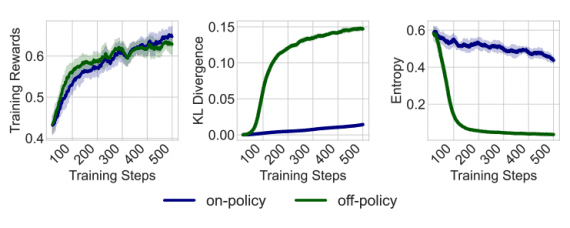
The Microsoft Research team introduced On-Policy RL with Optimal reward baseline (OPO) — a simplified reinforcement learning algorithm for aligning large language models. The new method addresses key problems of…

ZEROSEARCH: A Framework That Cuts LLM Search Training Costs by 88%

9 May 2025
zerosearch method

ZEROSEARCH: A Framework That Cuts LLM Search Training Costs by 88%

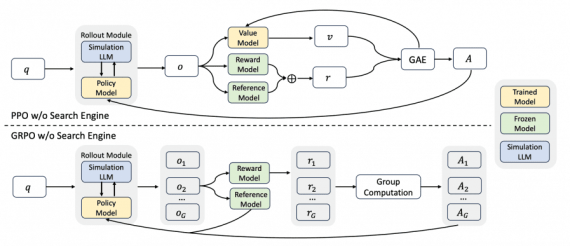
Alibaba’s NLP research team has officially open-sourced ZEROSEARCH, a complete framework for training LLMs to search without using real search engines. ZEROSEARCH builds on a key insight: LLMs have already…

DeepMath-103K: Advancing AI Reasoning Through Challenge

21 April 2025
deepmath reasoning dataset ai

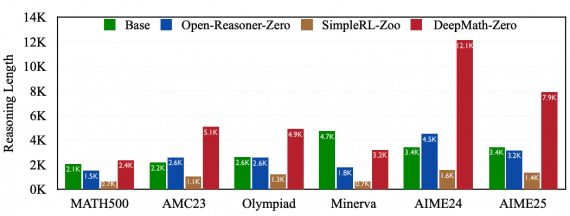
DeepMath-103K: Advancing AI Reasoning Through Challenge

Mathematical reasoning stands as a crucial benchmark for artificial intelligence systems, requiring logical deduction, symbolic manipulation, and multi-step problem-solving. Recent breakthroughs in AI reasoning have been significantly driven by reinforcement…

Convolutional Neural Networks (CNN): How They Work, Step by Step

25 December 2024
сверточная нейронная сеть пример

Convolutional Neural Networks (CNN): How They Work, Step by Step

A convolutional neural network (CNN, or ConvNet) is a type of neural network designed for data with a grid structure, above all images. Instead of connecting every input pixel to…

Building an AI-Powered Game: A Deep Dive into DeepLearning.AI’s Latest Free Course Making AI Game Development Accessible

2 December 2024
deeplearning ai game development course free

Building an AI-Powered Game: A Deep Dive into DeepLearning.AI’s Latest Free Course Making AI Game Development Accessible

DeepLearning.AI’s newly released course, “Building an AI-Powered Game,” represents a significant step forward in making AI game development accessible to developers and enthusiasts alike. This comprehensive analysis explores how the…

Variational Autoencoder (VAE): How It Works, With PyTorch Code

25 October 2024
вариационный автоэнкодер vae

Variational Autoencoder (VAE): How It Works, With PyTorch Code

A variational autoencoder (VAE) is a generative neural network that learns to compress data into a small, smooth latent space and to generate new data from it. Like an ordinary…

MinerU: Open-Source AI Solution Significantly Boosts Document Extraction Accuracy

30 September 2024
Structure AI document extraction ai

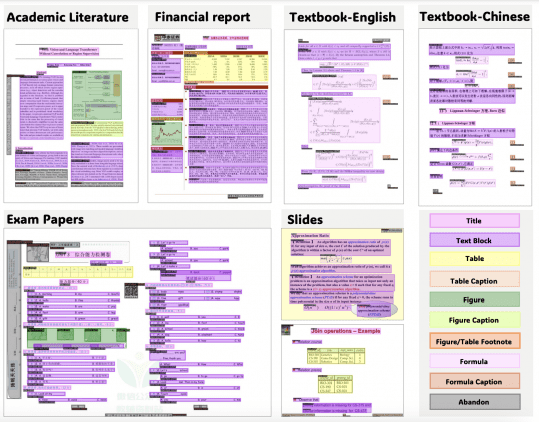
MinerU: Open-Source AI Solution Significantly Boosts Document Extraction Accuracy

Researchers from the Shanghai Artificial Intelligence Laboratory have developed MinerU, a cutting-edge open-source solution for precise document content extraction. MinerU is designed to extract and structure content from diverse document…

Molmo: Open Source Multimodal Vision-Language Models Outperform Gemini 1.5 and Claude 3.5

26 September 2024

Molmo: Open Source Multimodal Vision-Language Models Outperform Gemini 1.5 and Claude 3.5

Molmo is a new series of multimodal vision-language models (VLMs) created by researchers at the Allen Institute for AI and the University of Washington. The Molmo family outperforms many state-of-the-art…

EzAudio: Open Source Hyperrealistic Text-to-Audio Model

19 September 2024
ezaudio text-to-audio model generation ai

EzAudio: Open Source Hyperrealistic Text-to-Audio Model

EzAudio, a new transformer-based text-to-audio (T2A) diffusion model developed by researchers from Tencent AI Lab and Johns Hopkins University. EzAudio addresses key challenges in T2A generation, including generation quality, computational…

Scaling Test-Time Compute: A New Paradigm in LLM Performance

27 August 2024
search types

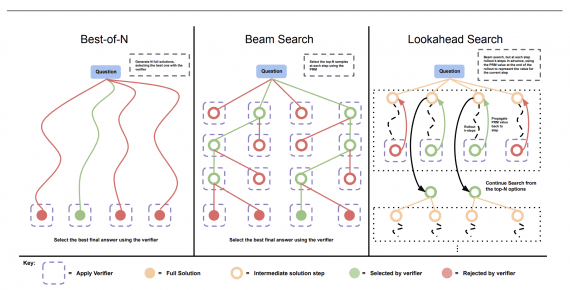
Scaling Test-Time Compute: A New Paradigm in LLM Performance

Researchers from UC Berkeley and Google DeepMind published a groundbreaking paper titled “Scaling LLM Test-Time Compute Optimally can be More Effective than Scaling Model Parameters.” This paper introduces a transformative…

LongWriter: Open-Source Framework for Generating Texts Beyond 10,000 Words

19 August 2024
agentwrite

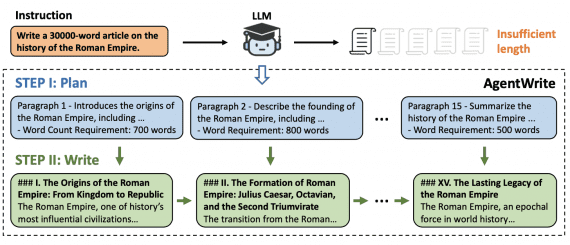
LongWriter: Open-Source Framework for Generating Texts Beyond 10,000 Words

LongWriter is a framework and a set of large language models (LLMs) designed specifically to enable ultra-long text generation, often exceeding 10,000 words while maintaining coherence, quality, and relevance. It…

CRAM: Cutting AI Energy Consumption by 1,000 Times

30 July 2024
CRAM

CRAM: Cutting AI Energy Consumption by 1,000 Times

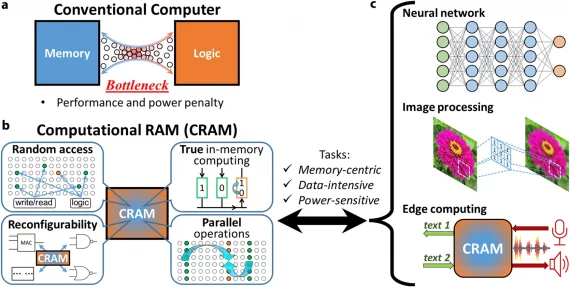
Researchers at the University of Minnesota Twin Cities have unveiled the Computational Random-Access Memory (CRAM) hardware architecture, poised to transform AI computing by drastically reducing energy consumption. CRAM promises to…

Generative Adversarial Networks (GANs): How They Work, With PyTorch Code

26 July 2024
генеративно-состязательная нейросеть GAN

Generative Adversarial Networks (GANs): How They Work, With PyTorch Code

A generative adversarial network (GAN) is a generative model made of two neural networks trained against each other. The generator turns random noise into fake data, such as images; the…

DenseAV Algorithm Learns Language from Videos

23 June 2024
DenseAV Algorithm

DenseAV Algorithm Learns Language from Videos

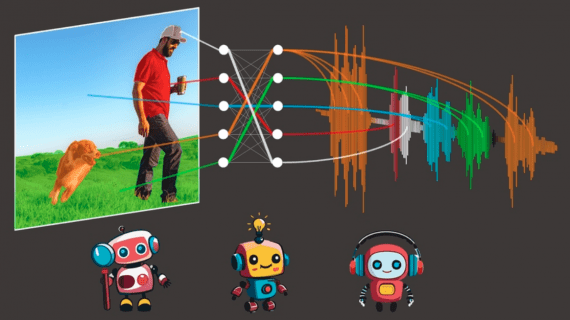
The algorithm DenseAV, developed at MIT, learns to understand the meaning of words and sentences by watching videos of people conversing. DenseAV outperformed other algorithms in tasks involving identifying objects…